"shifting" 2006

video and slide installation. time: endless
mixed media: film, slide and sound


discription

- english
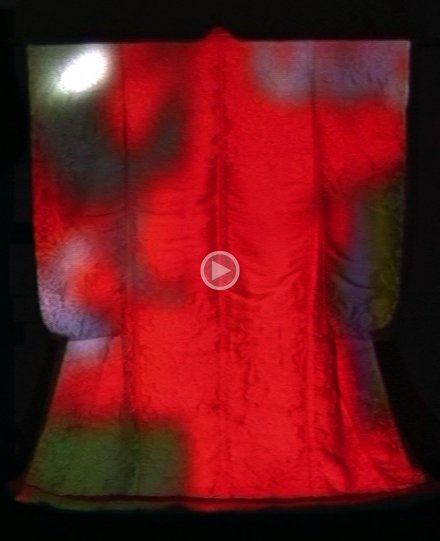
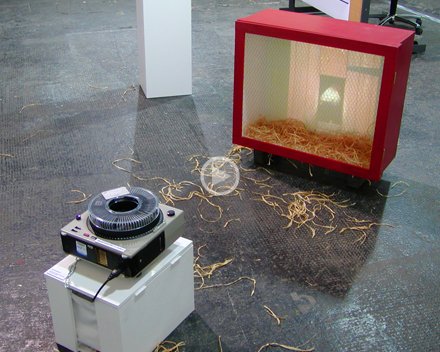
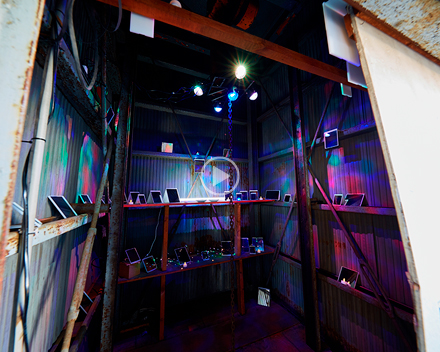
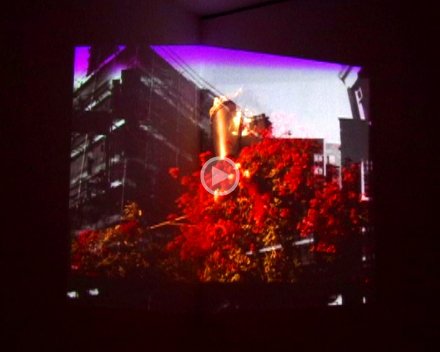
I am looking at the different structures between contemporary and traditional. Traditions are shifting to stereotypes in this contemporary consumer society. The key words of contemporary development are "easier" and/or "convenience". For instance, the computer has expanded all over the world and it has already become a part of our society. Therefore, due to the rise of digital equipment such a video projector, one of the biggest production companies has already stopped the product line of the slide projector. Slide projectors are shifting to video projectors along with the key words "easier" and/or "convenience".. Actually digitalize has a big meaning for the future’s development. Nevertheless slide projector shows much beautiful and fine photographic quality of images. Video projectors show pixelated images therefore it is impossible to reveal the clear detail of images. Essential aim of projectors, which is to show high qualities of images, is shifting to opposite side. This shifting is very similar to the development of contemporary and traditional structures, especially structure of urban city. My previous work "timeless" shows the ways in which we encounter aspects of traditional and contemporary culture. This work is a video projection and it has developed a dialogue using film, sound and textiles. In Japanese culture, the Kimono is a typical example of this, today in Japan the Kimono is only worn on special occasions and has increasingly faded from everyday life. A series of short films using the urban sprawl of Japans capital city, Tokyo. The films reveals the physical relationship to environment of the city and it’s contents of this urban environment such as trains, platforms, billboards, lights, signboards, sounds and so on. These films are projected onto typical Japanese traditional "kimono" as a screen. As the projection of the film occurs, the light from the projected images causes the surface of the screen to glow. The glow gradually fades as the image of film moves onto different parts of the screen. This interaction makes a variety of images, changing the appearance of the colour and patterns that have been separated and then re-combined. We can indicate which is the contemporary or traditional Japanese culture quite easily. The re ason is that it is sudden traditional culture changes to Japanese style western culture, which began about 200 years ago. However, most western cultures have a blurred boundary between traditional and contemporary that is because western culture is consisted gradually and is shifting to the form of city now. This shift is also similar to the relationship between slide and video projectors, which slide projector developed to video projector in only one generation even though it is an enormous change. I make a work "shifting", which combined traditional and contemporary references of two disparate elements/ideas in this work. It includes a short film and slides, using video and slide projectors and sound of London. Also the sound of the slide projector is used as an effective sound along side of the sound of video projector. A video projector shows a short film, which investigate the relationship between the physical environment of the city and it’s inhabitants; architectures, buses, billboards, lights, evoking the smell, sounds, chaos and fracture of this urban environment of contemporary urban city, London. A slide projector shows traditions of London. However, some of traditional images might have been shifted to stereotypes. Images of the both projectors are projected onto the same part of the wall repeatedly and showing images continuously. The mixed image of the projectors and the methods of presentation create a different structure with more complex layers of meaning and "high visual impact (Alexander, D. (2005)."slide show”. London. Tate Publishing P. 9)" which is experimental sampling processes exploring its manipulation of a video and slide projector. The time of the film and the rotation of slide projection are different and this presentation never shows the same images, therefore this work creates variety of elements that have been once separated and then re-combined. Also this interaction creates multiple images, changing the appearance of the colour and patterns that suggests ways in which we encounter aspects of traditional and contemporary structures. I will also analyse three artworks through the keywords space, time and narrative in connection to my work and an investigation is focused on the key words to develop my work. The work named “Flower” (1998), which is made by Peter Fischli and David Weiss. They projected flower images on the same part of the wall with using two slow-dissolve slide projections. “In this series they have sustained the pleasure, the sensual delight of flowers as a motif, making this one of their most disarming and convincing series of work (quoted in Fleck, R. Sontgen, B. Danto, C, A. Peter Fischli and David Weiss. London. Phaidon Press Limited. 2005. p53)” This series of work give visual pleasure of mixed images that are the fascination of flowers. I am also looking at Chris Maker’s work called “La Jetee”, 1962. The story is that after the Third World War, scientists force the survivors to retreat underground. The survivors conducted strange time travel experiments in an effort to escape from present to past or future. During the film there are sound, narrated voice and whisper that make layers and it is made of black and white still images. This work is related to death and memory. Finally, the artwork “Caterpillar” 2001 made by Win Delvoye. Much of his work emanates from the confrontation between historical objects and contemporary references that seemingly have nothing to do with each other, thus striking a balance between the reality of the moment and the romantic glorification of the past. In his life-size replicas of Caterpillar excavators, Delvoye juxtaposes medieval craftsmanship with machine-age technology. These massive sculptures are made in steel and perforated with Gothic filigree, transforming familiar icons of productivity into ornate, non-utilitarian objects. He questions what is sacred and what utilitarian as they inhabit the worlds of the banal and the distinctly uncommon. Also the work has the relationship between space and the work.
- japanese
長い時間をかけ発展してきた私たち固有の伝統は、今日の消費社会で地域を代表する観光産業のステレオタイプの一つになっています。消費社会の変化が早く、様々な物が生み出され、そして消えていきます。その発展のキーワードは、「簡単」「便利」に思えます。 例えば、デジタルカメラです。ピクセレートされた画質はフィルムより劣っているのに対し、画質の良い本格的なアナログより簡単に確認/編集でき、現像の必要がなく、大量のフィルムを持ち運ばずに多くの写真が撮影可能で便利になっています。コンピュータは世界中に広がり、既に私たちの生活の一部となりました。 その伴い、デジタルカメラ、ビデオカメラといったデジタル機器が主流になり、アナログカメラ、スライド映写機といったアナログ製品は姿を消しつつあります。スライド映写機の最大の生産会社は、既に製品ラインを止めてしまいました。 「デジタル化」は将来的な発展に大きな意味を持っています。しかしながら「簡単」「便利」な発展は、本質的な目的と異なった方向に向かっています。カメラでの撮影において、高品質で美しいイメージという不可欠で本質的な発展にとどまらない、現代社会の多様化した存在意義を生み出しでいます。 都市開発においても、やはり同じ事が言えるでしょう。固有の風土に合わせ長い時間をかけ発展、改善されてきた伝統的な木造建築は徐々に消し去り、どんな気候にも耐えうる手のかからないコンクリートで作られ、気温、湿度までコントロールされた現代的な建築に姿を変えようとしています。 この作品 "shifting" では、西洋の都市の「ロンドン」をテーマに制作しています。ロンドンで撮影した短編映像は、今日のロンドンをテーマに、建築、バス、看板、ライト、臭い、音、カオスなどから制作しました。この短編映像はビデオプロジェクターを使用し、一方、アナログカメラで撮影した伝統的な都市環境をスライド映写機で投影します。また、スライド映写機の音は伝統的なイメージの効果音として使用します。 実験的なサンプリング・プロセスで収集した、現代、伝統の異なったイメージは、ビデオプロジェクターとスライド映写機を使い投影します。二つのプロジェクターは同じ場所に重なりあるように繰り返しプロジェクトします。ビデオプロジェクターで投影される短編映像、スライド映写機で映されるイメージは時間的な違いにより、決して同じ組み合わせになる事はなく、分離されてた多様な要素を、再結合し新たな視覚的効果を作り出します。この展示法により、偶然にできた二つのイメージの組み合わせが複雑な意味を創り出します。 この相互作用により様々な異なったイメージを生み出されます。私たちが生活する現代社会で見え隠れする伝統文化、またそれらが共存していく方法はないか考えて頂く機会になれば嬉しく思います。


photo
- see photo

"timeless" 2006

Setsuko Kawahara and Naoki Hamaguchi
video installation. h160cm x w120cm
mixed media: textiles, films and sound


discription

- english
Contemporary life often makes us forget about the traditions of our own Culture, but there are times when we realize how much we miss those traditions. In Japanese culture, the Kimono is a typical example of this, today in Japan the Kimono is only worn on special occasions and has increasingly faded from everyday life. Nevertheless, when it is worn its cultural importance cannot fail to be recognised and enjoyed. This exhibitions presents a collaborative project between Naoki Hamaguchi and Setsuko Kawahara, the artists have developed a dialogue using film, sound and textiles, in order to explore the interaction between the "contemporary" and "traditional" aspects of Japanese culture today. Naoki Hamaguchi has created a series of short films using the urban sprawl of Japans capital city, Tokyo. The films investigate the relationship between the physical environment of the city and it’s inhabitants; trains, platforms, billboards, lights, evoking the smell, sounds, chaos and fracture of this urban environment. The manipulation of various media is explored using experimental sampling processes in which sound plays an important part. The films are projected onto a Kimono specifically woven by Setsuko Kawahara using silk and phosphorescent yarn that stores light and emits it to "glow" in the dark (developed by a Japanese company "GOSEN" for agriculture use). This yarn allows the textile to become a transient material. The weave and pattern of the Kimono is inspired by traditional Kimono’s and translated into a contemporary design, woven by a TC-1 Independent thread controller- sampling Jacquard Loom. As the projection of the film occurs, the light from the projected images causes the surface of the screen to glow. The glow gradually fades as the image of film moves onto different parts of the screen. This interaction creates a variety of images, changing the appearance of the colour and patterns. This work creates a surprising variety of elements that have been separated and then re-combined, suggesting ways in which we encounter aspects of traditional and contemporary culture.
- japanese
現代社会の生活では、私たち独自の伝統文化をしばしば忘がちになります。しかし、時に私たちは伝統文化の大切さを認識します。日本文化の中で、着物はこの典型的な例になります。今日の日本では、特別な行事などでしか着物を着る機会はありません。日常生活からは急速に消え去ろうとしています。 しかし、着物を着ることにより伝統文化の重要性を認識し、楽しむことができます。 この作品では、映像、音、織物の相互関係を発展させ、伝統的な、また現代の日本文化のおける局面の間に生じる相互作用を表現します。 濱口直輝は、日本の首都、現代の東京をテーマに一連の短編映像を制作しました。東京の都市環境、騒音、電車、看板など、現代社会の象徴である事象を使用します。様々表現手段を、実験的なサンプリング・プロセスで研究し制作しています。現代社会を表現するため、映像とともに音も重要な役割を果たします。 映像は、"蓄光糸" と絹で織られた着物(制作:川原節子)に投影します。 "蓄光糸" によって着物に伝統的な柄を織リ込みます。振り袖は、既婚者は着る事が出来ません。伝統、現代の変化を表現するため振り袖を使用します。 映像を投影することにより "蓄光糸" は光を貯め、暗い部分で伝統的な模様を輝かせます。また、光を浴びない部分の"蓄光糸" は、すぐに輝きを失います。現代社会をテーマに制作した映像の中で、伝統的な着物の模様は見え隠れします。映像が変化するのと同様、着物に織られた伝統的な模様も変化し続けます。この相互作用によって様々なイメージを作り出します。 この作品を通し、私たちが生活する現代社会で見え隠れする伝統文化を認識し、共存していく方法はないか考えて頂く機会になれば嬉しく思います。 展示:
2008年 "東京画 QUI (Tokyogaqui)" (ブラジル)
2006年 "Kimono, Canvas of my Japanese Spirit” (イギリス)


photo
- see photo

"chickens and eggs" 2006

spinning an endless circle series
slide projection, time endless


discription
- english
I am looking at the nature of the word "endless". With the rapid increase of technological development, we come across the experiences of technology in our everyday life. The nature of the word "endless" might be changed or has already changed the way in which we encounter everyday. The development of the computer might have changed the meaning of "endless" because we are able to save data in digital format. It means keeping the data endlessly without losing any qualities. Before this development "endless" could be used a circle of birth and death, which human, cannot change. The computer development is actually changing the meaning of words and these developments will be endlessly continued by human’s strong desire. However, these technological developments gave many possibilities for video artists to make variety of images and to edit sounds. Some artists investigated and experimented with projecting images on a variety of surfaces that objects, people, and screens placed in "unexpected locations", using video and slide projectors (e.g. studio Azzuro, krzystof Wodiczko and so on). The ways of presentation created a different structure with more complex layers of meaning and "high visual impact", which used projectors. These machines show still and moving images and also they are able to play continuously and endlessly, using the repeat function. To compare video and slide projectors, slide projectors have functions in lower technology, extend more time and are also requires human's operation. One of the biggest production companies has already stopped the product line of the slide projector. Despite this circumstance, a large number of artists still use slide projectors instead of video projectors. I investigate especially on why they chose that particular machine for their work. In order to show this I will compare the characters of the slide and the video projector to examine what the fascinations of slide projectors are and why artists use slide projectors for their work. I will also analyse three artworks through the keywords space, time and narrative in connect to my interest in "endless". I am looking at Bill Viola as one of my reference artists. Viola's works suggest the fundamental question of birth, death and our existence. The question is impossible to answer, in the particular question of our existence. His work called "Nantes Triptych" (1992) shows three large-scale panels of projected images which consist of images of birth, death and a memory of childhood. Birth and death are repeated actions, which shows the endless circle of our existence. I am also looking at Chris Maker's work called "La Jetee", 1962. The story is that after a third world war, scientists force the survivors to retreat underground. The survivors conducted strange time travel experiments in an effort to escape from present to past or future. During the film sound, narrated voice and whisper make layers and it's made of black and white still images. This work is related to death and memory. Finally, the work named "Flower" (1998), which is made by Peter Fischli and David Weiss. They projected flower images on the same part of wall with using two slow-dissolve slide projections. "In this series they have sustained the pleasure, the sensual delight of flowers as a motif, making this one of their most disarming and convincing series of work". This series of work give visual pleasure of mixed images of the fascination flowers. I am making a series of work called "spinning an endless circle", which includes an animation of an endless story and images of repeated actions or objects, using slide projectors and the sound. The Slide tray has an endless circle and also technically it is possible to show the images of slides continuously and endlessly. However, the slide projector could be stopped by a tiny accident, or technical hitch. Computers are able to save data as digital format and it keeps the data endlessly without losing any qualities. However, both projectors are impossible to show the images forever. I would like to show this reality of transience through my work. As the projector changes slides automatically, the images show the simple repeated actions or an endless story animation. My subject in the animation is "endless", upon which manipulation of a slide projector is explored by experimental sampling processes. The sound of the slide projector is used as an effective sound to the animation and represented the nature of the word, which is manipulated by a slide projector, contrives the repeated action. This work challenges the viewers' understanding of the nature of the word "endless". Also it suggests re-consideration of the idea of sublime high technology, recent rapid increase of technological development and what reality is.
- japanese
このシリーズ作品は、「endledss」の本質的性質に焦点をおいて制作しました。 急速な技術発展により、日々の生活において、テクノロジーは必要不可欠な存在になりました。このような状況の中で、「endledss」の本質的な意味変化が生じています。 特にコンピューターの発展により、デジタル化した情報が保存できるようになりました。デジタル フォーマットでの保存は、「endledss」の性格に大きな影響を与えています。現実的、哲学的に「endledss」な物の存在は否定的ですが、デジタル化された情報は、品質を失う事なく継続して所有できると考えてしまいます。 テクノロギーの発展以前、デジタルに呼応する言葉で表せば「アナログ」になるでしょうか、アナログの時代は「輪廻転生」のような、特殊な思考にのみ用いられた言葉だと考える事が出来ます。 テクノロジーの発展は、様々な分野において多くの可能性を期待できるようになります。これらの発展を活かし、映像やビデオ インスタレーションのような多くの芸術作品が増えていきました。多くの芸術家は、物や人々など予期しない様々な表面に、イメージや映像を映写し実験しました。 映写機を使った表現法は、異なった、より複雑な意味と、高い視覚的効果の構造を生み出しました。映写機には、静止画を投影する「スライド プロジェクター(アナログ)」、動画を映し出す「ビデオ プロジェクター(デジタル)」があります。両映写機とも、リピート機能を使用して連続して限りなく「endledss」に再生する事が可能です。現実的に「endledss」に再生する事は不可能です。これは、デジタル化した情報が「endledss」に保存できるとゆう錯覚と感覚に酷似しています。 シリーズ作品「spinning an endless circle」では、スライド映写機を使用して、「endledss」に繰り替えされるを製作します。スライド・トレーは円形で、「 endledss」に途切れる事なく、スライドをを投影する事を前提に使用します。実験的サンプリング・プロセスで創られたスライドの主題は「endledss」です。スライド映写機の音は効果音として使用します。 この作品を通し「 endledss」という言葉の本質的について考える機会になりって頂けたらと思います。


photo
- see photo

"the seed man" 2006

spinning an endless circle series
slide projection, time endless


discription
- english
I am looking at the nature of the word "endless". With the rapid increase of technological development, we come across the experiences of technology in our everyday life. The nature of the word "endless" might be changed or has already changed the way in which we encounter everyday. The development of the computer might have changed the meaning of "endless" because we are able to save data in digital format. It means keeping the data endlessly without losing any qualities. Before this development "endless" could be used a circle of birth and death, which human, cannot change. The computer development is actually changing the meaning of words and these developments will be endlessly continued by human’s strong desire. However, these technological developments gave many possibilities for video artists to make variety of images and to edit sounds. Some artists investigated and experimented with projecting images on a variety of surfaces that objects, people, and screens placed in "unexpected locations", using video and slide projectors (e.g. studio Azzuro, krzystof Wodiczko and so on). The ways of presentation created a different structure with more complex layers of meaning and "high visual impact", which used projectors. These machines show still and moving images and also they are able to play continuously and endlessly, using the repeat function. To compare video and slide projectors, slide projectors have functions in lower technology, extend more time and are also requires human's operation. One of the biggest production companies has already stopped the product line of the slide projector. Despite this circumstance, a large number of artists still use slide projectors instead of video projectors. I investigate especially on why they chose that particular machine for their work. In order to show this I will compare the characters of the slide and the video projector to examine what the fascinations of slide projectors are and why artists use slide projectors for their work. I will also analyse three artworks through the keywords space, time and narrative in connect to my interest in "endless". I am looking at Bill Viola as one of my reference artists. Viola's works suggest the fundamental question of birth, death and our existence. The question is impossible to answer, in the particular question of our existence. His work called "Nantes Triptych" (1992) shows three large-scale panels of projected images which consist of images of birth, death and a memory of childhood. Birth and death are repeated actions, which shows the endless circle of our existence. I am also looking at Chris Maker's work called "La Jetee", 1962. The story is that after a third world war, scientists force the survivors to retreat underground. The survivors conducted strange time travel experiments in an effort to escape from present to past or future. During the film sound, narrated voice and whisper make layers and it's made of black and white still images. This work is related to death and memory. Finally, the work named "Flower" (1998), which is made by Peter Fischli and David Weiss. They projected flower images on the same part of wall with using two slow-dissolve slide projections. "In this series they have sustained the pleasure, the sensual delight of flowers as a motif, making this one of their most disarming and convincing series of work". This series of work give visual pleasure of mixed images of the fascination flowers. I am making a series of work called "spinning an endless circle", which includes an animation of an endless story and images of repeated actions or objects, using slide projectors and the sound. The Slide tray has an endless circle and also technically it is possible to show the images of slides continuously and endlessly. However, the slide projector could be stopped by a tiny accident, or technical hitch. Computers are able to save data as digital format and it keeps the data endlessly without losing any qualities. However, both projectors are impossible to show the images forever. I would like to show this reality of transience through my work. As the projector changes slides automatically, the images show the simple repeated actions or an endless story animation. My subject in the animation is "endless", upon which manipulation of a slide projector is explored by experimental sampling processes. The sound of the slide projector is used as an effective sound to the animation and represented the nature of the word, which is manipulated by a slide projector, contrives the repeated action. This work challenges the viewers' understanding of the nature of the word "endless". Also it suggests re-consideration of the idea of sublime high technology, recent rapid increase of technological development and what reality is.
- japanese
このシリーズ作品は、「endledss」の本質的性質に焦点をおいて制作しました。 急速な技術発展により、日々の生活において、テクノロジーは必要不可欠な存在になりました。このような状況の中で、「endledss」の本質的な意味変化が生じています。 特にコンピューターの発展により、デジタル化した情報が保存できるようになりました。デジタル フォーマットでの保存は、「endledss」の性格に大きな影響を与えています。現実的、哲学的に「endledss」な物の存在は否定的ですが、デジタル化された情報は、品質を失う事なく継続して所有できると考えてしまいます。 テクノロギーの発展以前、デジタルに呼応する言葉で表せば「アナログ」になるでしょうか、アナログの時代は「輪廻転生」のような、特殊な思考にのみ用いられた言葉だと考える事が出来ます。 テクノロジーの発展は、様々な分野において多くの可能性を期待できるようになります。これらの発展を活かし、映像やビデオ インスタレーションのような多くの芸術作品が増えていきました。多くの芸術家は、物や人々など予期しない様々な表面に、イメージや映像を映写し実験しました。 映写機を使った表現法は、異なった、より複雑な意味と、高い視覚的効果の構造を生み出しました。映写機には、静止画を投影する「スライド プロジェクター(アナログ)」、動画を映し出す「ビデオ プロジェクター(デジタル)」があります。両映写機とも、リピート機能を使用して連続して限りなく「endledss」に再生する事が可能です。現実的に「endledss」に再生する事は不可能です。これは、デジタル化した情報が「endledss」に保存できるとゆう錯覚と感覚に酷似しています。 シリーズ作品「spinning an endless circle」では、スライド映写機を使用して、「endledss」に繰り替えされるを製作します。スライド・トレーは円形で、「 endledss」に途切れる事なく、スライドをを投影する事を前提に使用します。実験的サンプリング・プロセスで創られたスライドの主題は「endledss」です。スライド映写機の音は効果音として使用します。


photo
- see photo

"stitching" 2006

video and slide installation. time: endless
mixed media: film, slide and sound


discription
- english
I am interested in the interaction between different hand and machine textile processes. In order to show this I have developed a dialogue between hand and machine processes using film and sound. I make short films using the textile process as subject, exploring their making, through construction of simple pattern, using stitch, weave, and knit etc. The hand and machine are invisible but are represented by sound in the presence of the textile action defined by both hand and machine techniques. My subject in the film is textile screen, upon which manipulation of various media is explored using experimental sampling processes. There are documented and "catalogued". The screen becomes a transient material, manipulated by the textile action, which contrives textile and pattern. This project includes a film of stitch marks, which are projected onto the screen. The screen is printed illuminate pigment. As the projection of film occurs, the light from the projected stitched line causes the surface of the 'screen' to glow. The glow gradually fades as the stitch making moves onto different parts of the screen. This interaction creates a variety of images, changing colour and pattern. This work creates, a surprising space of elements that have been separated and then re combined, challenges the viewers understanding of "textile"process. Sound is an important element, achieved from the textile tool and used within the interaction. art prize
"The Christine Risley Prize" 2006 (UK)
- japanese
異なった構造の相互作用によって生じる偶発的な性質に焦点をおいています。 この作品では、「手」と「機械」の異なったテキスタイルの制作過程から生じる相互作用を主題にしています。これを表すため、映像、音を使用し異なった制作過程から生じる相互作用を発展させました。 テキスタイルの制作過程をテーマに、単純な「縫い目模様」から短編のアニメーションを制作します。「手」と「機械」の実際の作業は、視覚的に表す事ができないため音と映像で表現しています。 この作品で、スクリーンが重要な役割を果たします。そこで、様々なメディアの操作を、実験的なサンプリング・プロセスにより慎重に研究します。このプロジェクトは「縫い目模様」で制作した映像を、スクリーンに投影します。 スクリーンには蓄光するピグメントがスクリーンプリント (シルクスクリーン)されています。投影された「縫い目模様」を、スクリーン表面に光を貯め、暗い部分では「縫い目」模様は発光します。また、スクリーンの異なった部分に「縫い目模様」の映像が移動するのに従って、一定時間しか輝けないスクリーンの表面にできた「「縫い目模様」は徐々に色あせます。 この相互作用により、光と模様は様々に変化し、次々と新しいイメージを作り出します。作品の構成している要素は、離れ、再び結合を繰り返し、偶発的な性質の空間を創り出します。 この作品は見る人にテキスタイル制作過程を認識して頂けるかの挑戦的な作品です。その中でテキスタイル道具の音は、この相互作用の中で重要な要素として使用されます。 受賞
"The Christine Risley Prize" 2006 (イギリス)


photo
- see photo